
The First Thing Your Newborn Needs Isn't a Bath
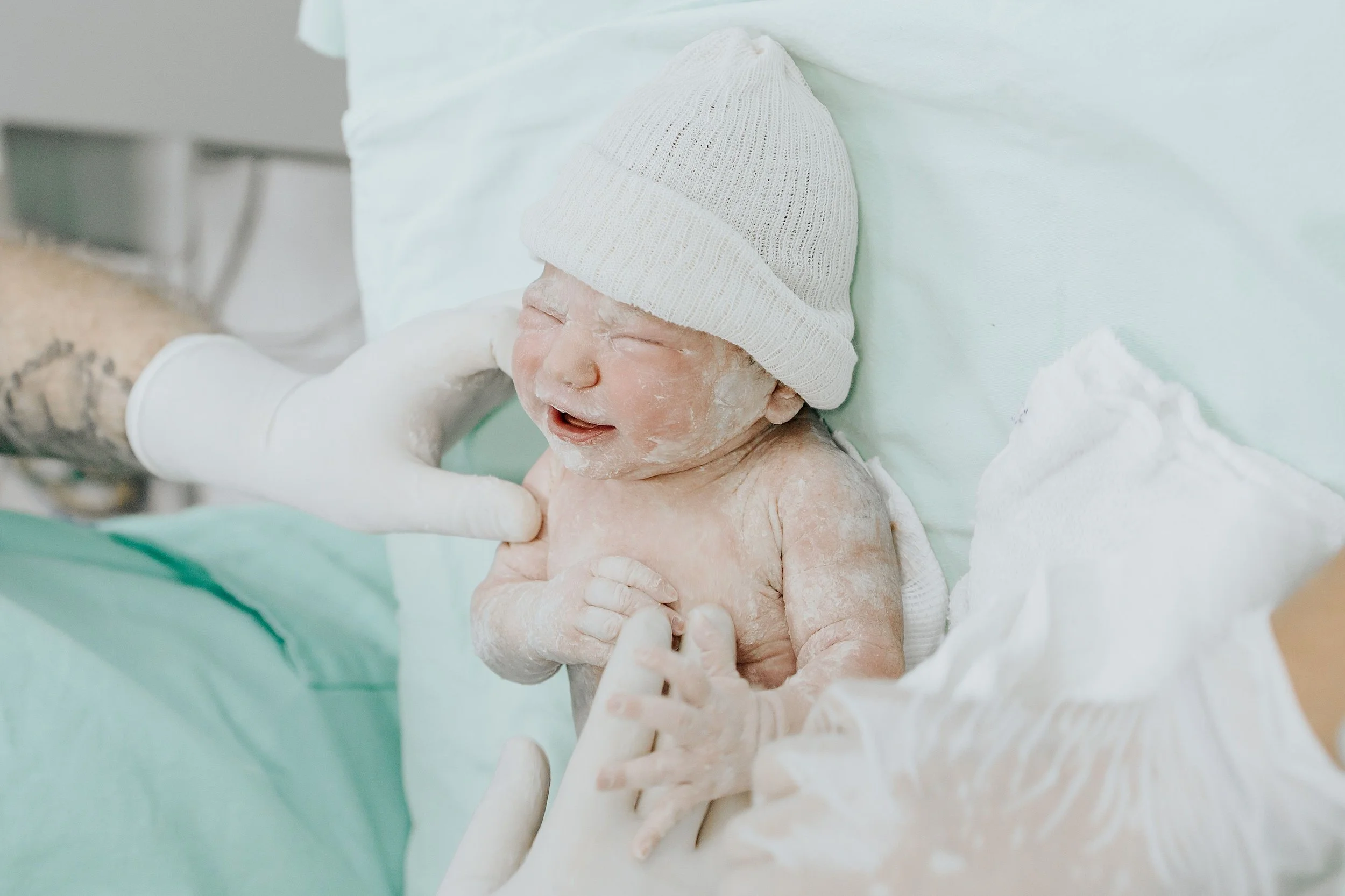
Most parents expect their baby to get a bath shortly after birth—but these days, that's usually not the case.
As a perinatal nurse, certified breastfeeding specialist, and mom of four, I'm breaking down why we wait, what that white "baby cheese" on your newborn's skin is actually doing, and how delaying a bath can support bonding, breastfeeding, and a smoother transition to life outside the womb.
Newborn Baths Are Just the Beginning...
Babies don't come with a manual—but Bundle of Joy, Bundle of Chaos: Newborn Care 101 is the next best thing. I'll walk you through the newborn basics so you can spend less time Googling and more time enjoying your baby.
So, you just had a baby.
You're staring at those tiny fingers, squishy cheeks, and perfect little nose when you suddenly notice something...
They're kind of covered in... stuff.
Blood, amniotic fluid, vernix, maybe even a little poop. Not exactly the clean, freshly powdered baby you see in commercials.
Naturally, many parents assume a nurse is going to swoop in shortly after birth and say, "Alright, let's get this baby cleaned up!"
But these days, that's usually not what happens.
In fact, if you've had a baby in the last seven or eight years, you've probably noticed that hospitals are waiting much longer before giving newborns their first bath. As a perinatal nurse, certified breastfeeding specialist, and mom of four, I get asked about this all the time:
"Wait... we're just leaving all that goop on the baby?"
Yep. And there's actually a really good reason for it.
The Recommendation Has Changed
Years ago, babies were often bathed shortly after birth. Today, the World Health Organization recommends delaying a newborn's first bath for at least 24 hours whenever possible. If there are cultural or personal reasons for bathing sooner, they still recommend waiting at least six hours after birth.
Why?
Because research has shown that waiting offers some pretty significant benefits for your baby's health and wellbeing.
Let's break it down.
Newborns Get Cold... Fast
One of the biggest reasons we delay that first bath is temperature regulation.
Newborns are not great at keeping themselves warm. They have very little body fat, and a lot of their skin is exposed compared to their tiny body size.
Now imagine taking that tiny baby, getting them wet, and exposing them to cooler air.
Not ideal.
When newborns get cold, their bodies have to work overtime to warm themselves back up. In some cases, this can lead to hypothermia and can affect things like blood sugar regulation.
Keeping baby dry, warm, and skin-to-skin with their parent is often the best way to help them transition to life outside the womb.
The First Bath Is Usually Not Their Favorite Spa Experience
I know we picture newborn baths as calm and adorable.
Reality?
Most babies are not impressed.
They cry.
They shiver.
They get stressed.
And all that crying and shivering burns energy.
That means babies can use up precious blood sugar reserves during a time when they're already adjusting to a brand-new world. Delaying the bath helps babies stay calm, comfortable, and physiologically stable during those first important hours.
Skin-to-Skin Time Matters More Than a Bath
One of my favorite moments after birth is seeing a baby placed skin-to-skin with their parent.
This isn't just a sweet photo opportunity.
Skin-to-skin contact helps regulate a newborn's temperature, breathing, heart rate, and stress levels. It also gives babies the opportunity to show those early feeding cues that help them latch and breastfeed successfully.
Some studies have found that delaying a newborn's first bath may support breastfeeding by giving babies more uninterrupted skin-to-skin time and opportunities to latch in those early hours after birth.
Translation?
Sometimes the best thing we can do is leave baby exactly where they are—snuggled up on your chest.
Let's Talk About the White Cheesy Stuff
You know that white, creamy coating babies are often born with?
That's called vernix caseosa.
And despite what it looks like, it's actually pretty incredible.
Think of vernix as your baby's first moisturizer and protective skin barrier.
It helps protect their delicate skin while they're in the womb and continues to support skin health after birth.
Instead of washing it off right away, we often gently rub it into the baby's skin and let it absorb naturally.
So before you call it gross, just know your baby's skincare routine is already better than mine.
Does Delaying the Bath Mean We're Ignoring Hygiene?
Not at all.
If baby pees, poops, or has meconium on their skin, we'll absolutely clean those areas.
Delaying a bath doesn't mean leaving baby dirty.
It simply means we're avoiding a full bath until they've had time to adjust to life outside the womb safely and comfortably.
So Before You Reach for the Baby Shampoo...
Waiting to bathe your newborn isn't about convenience—it's about supporting their transition into the world.
Delaying that first bath can help:
Maintain body temperature
Support healthy blood sugar levels
Reduce stress
Promote bonding and skin-to-skin contact
Support breastfeeding success
Protect baby's skin through the benefits of vernix
So if your nurse tells you your baby isn't getting a bath right away, don't worry, Mama. Your baby isn't being neglected. They're being given the chance to stay warm, stay close, and ease into their brand-new world one snuggle at a time.
And honestly? That's a much better welcome than a bath.
Sources:
Caring for a Newborn | World Health Organization
