
C-Section Recovery Tips You’ll Wish You Knew Sooner
For most first-time parents, a C-section wasn’t part of the plan. While some families know going in that a cesarean birth is likely, the majority arrive at the hospital hoping for a vaginal delivery — and then find themselves in the operating room when plans change.
If your baby arrived via the “sunroof exit,” this post is for you.
C-section recovery looks different from vaginal birth recovery because it is different. A cesarean is major abdominal surgery, and your body deserves time, patience, and support as it heals. Here are the things I wish more parents knew before heading home.
Be Kind to Yourself (You Just Had Major Surgery)
A C-section is not a “small procedure.” There were seven layers between the outside world and your baby, and your body needs time to recover from that.
In general:
Expect recovery to be more physically demanding than many vaginal births
Follow your provider’s lifting restrictions carefully
Most are advised not to lift anything heavier than ~10 pounds
In real life, that usually means: Your baby plus their car seat should be the heaviest thing you lift.
Support healing by:
Staying hydrated
Eating enough calories from nourishing foods
Resting whenever possible (yes, I know — easier said than done)
You’re not failing if rest is imperfect. Just do your best.
Stay on Top of Pain Medication
Many people are discharged with just acetaminophen (Tylenol) and ibuprofen (Advil) — and that’s often enough when taken consistently.
A common mistake I see? Trying to “tough it out.”
Pain that isn’t well controlled:
Makes movement harder
Slows healing
Increases exhaustion
It’s much easier to stay ahead of pain than to chase it once it’s intense. Many providers recommend taking pain meds on a schedule for the first few days.
In hospital, you may be offered rectal anti-inflammatory suppositories. While awkward, they:
Work faster
Last longer
Are often more effective than oral meds
If you’re in significant pain, talk to your provider. Comfort matters. No heroes required.
Gentle Movement Matters
Once it’s safe to do so, movement is one of the best things you can do for recovery.
Benefits include:
Improved blood flow and wound healing
Reduced risk of blood clots
Better lung expansion and breathing
Improved digestion and less constipation
Start slow. Short walks count.
And don’t forget to ask about stool softeners — constipation plus a fresh incision is not a combo you want.
Consider Compression Support
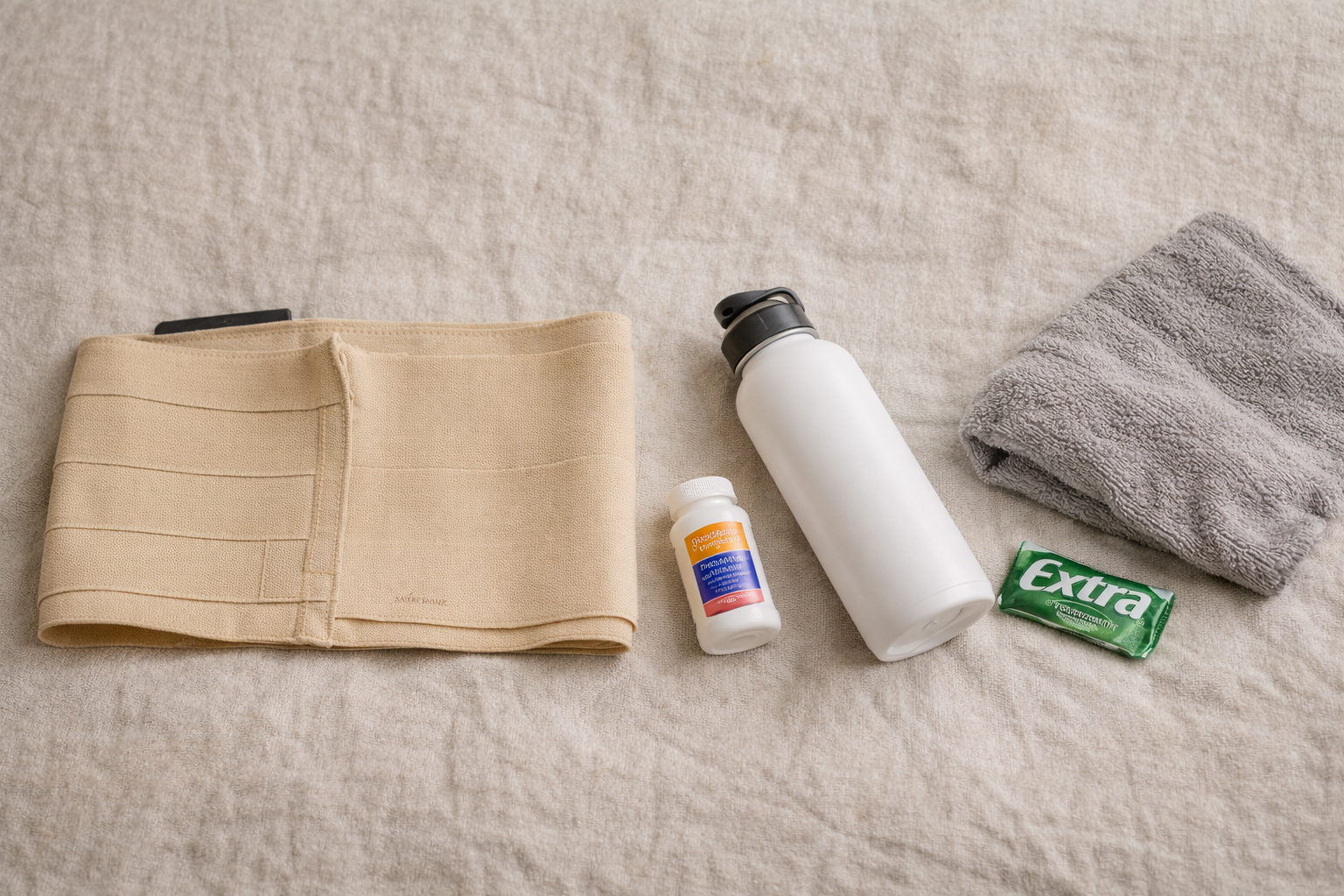
Compression garments can be incredibly helpful after a C-section when used correctly.
They can:
Reduce pain by supporting your abdomen
Make movement more comfortableDecrease swelling
Help protect and support the incision
Potentially improve scar healing
Tips for compression:
Choose garments with uniform compression (not self-wrapped unevenly)
Compression should sit across the incision, not just above it
It should feel supportive — not restrictive
Take breaks when needed
Always check with your provider before starting compression.
Splint Your Incision During Strain
Any activity that increases pressure inside your abdomen can stress your incision, including:
Coughing
Sneezing
Laughing
Crying
Vomiting
Bowel movements
To protect your incision: Hold a pillow, blanket, towel, or anything soft firmly against your abdomen during these moments.
This “splinting” supports the incision from the outside and reduces strain on healing tissue.
Keep Your Incision Clean and Monitor Closely
Most surgeons recommend:
Showering normally
Letting water run gently over the incision
No scrubbing or harsh cleansersPat dry with a clean towel or allow to air dry
Avoid lotions, creams, or oils unless specifically instructed.
Watch for signs of infection and report them immediately:
Increasing redness
Separation along the incision
Foul odor
Discolored drainage
Fever or feeling unwell
If your incision was closed with:
Sutures: they usually dissolve on their own
Staples: you’ll be told when and where to have them removed (often around 1 week postpartum)
Always follow your surgeon’s specific instructions.
Take Care of Your Mental Health
C-section recovery isn’t just physical.
Especially if your cesarean was unplanned or emergent, you may experience:
Grief over how birth unfolded
Shock or disappointment
Feelings of loss of control
There is no such thing as a “normal” birth — but feelings about your experience still matter.
Check in with yourself. Talk with your partner. Lean on your support system. Connecting with other C-section parents can be incredibly validating.
You didn’t fail. You joined a very strong club.
Bonus Tip: Chew Gum
Yes — gum.
Studies show that chewing gum for 30–60 minutes, three times a day after surgery may:
Help bowels wake up faster
Reduce gas pain
Speed up return of normal digestion
Possibly shorten hospital stay
Throw a pack in your hospital bag. Low effort, potential high reward.
C-section recovery takes time, patience, and support — and you deserve all three. Healing looks different for everyone, but knowledge makes the process less overwhelming.
If you’ve had a C-section before, share your best recovery tips with other parents. Community matters.
