
Breast Pump FAQs (Part 1): Flange Size, Fridge Hack, Best Time to Pump + Sharing Pumps
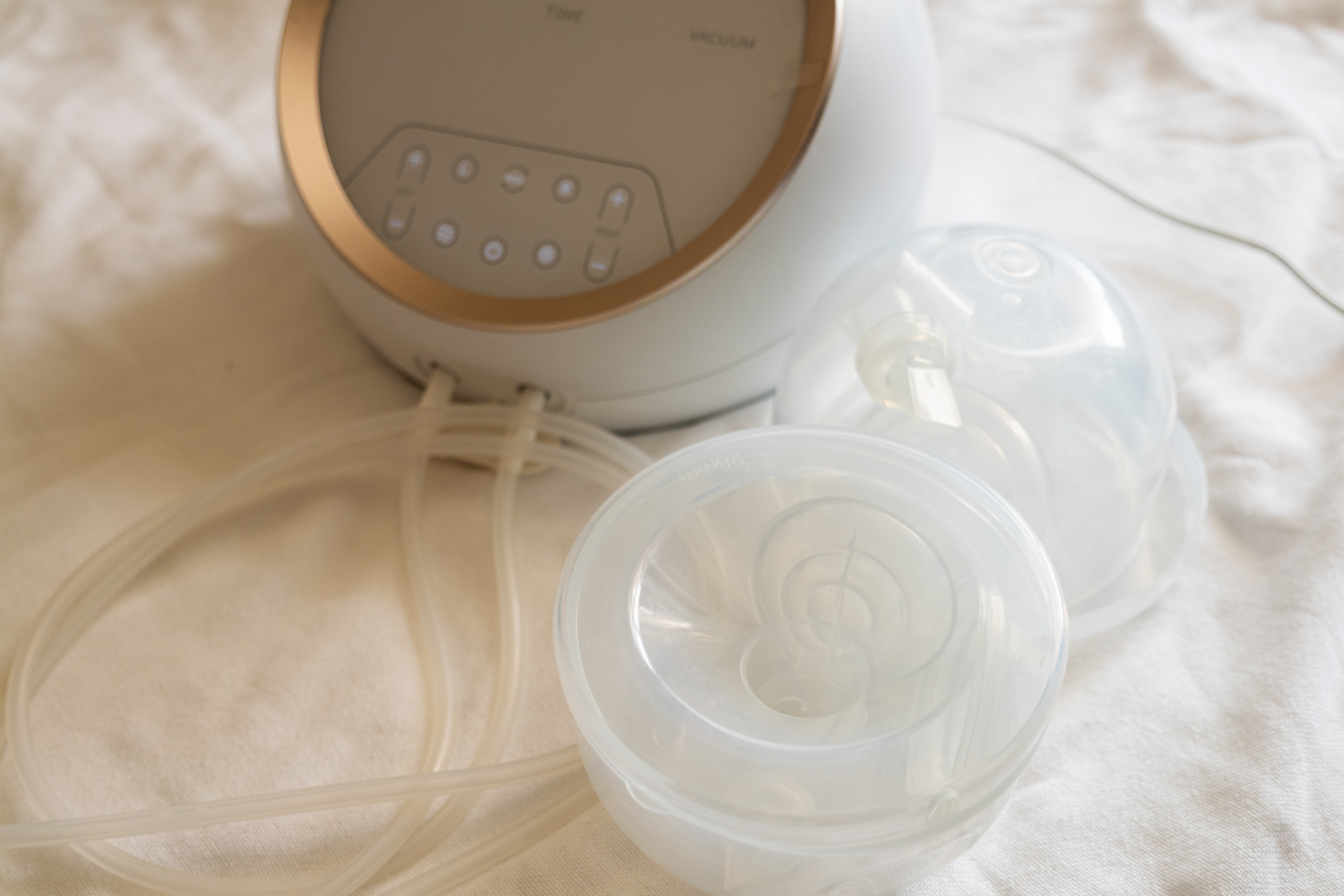
I asked for your breast pump questions… and you delivered.
Welcome to Part 1 of Breast Pump FAQs — the real questions you’re actually asking.
I’m Mama Nurse Tina, a certified perinatal nurse, certified breastfeeding specialist, and a mama of four. Let’s get into it.
Breast Pumps EXPOSED: Your Most Asked Questions Answered!
This read is best combined with our Boob Better: Breastfeeding 101 course
1) How do I know if I have the right flange size?
Flange size matters more than most people realize. The wrong size can lead to pain, nipple damage, and even lower output.
Beyond measuring (we’ll get to that in Part 2), here are four signs your flange size is likely a good fit:
Pumping is comfortable (no “white-knuckle it” sessions)
You can empty your breasts in about 15–20 minutes
You don’t see areola being pulled into the flange tunnel while pumping (often a sign the flange is too big)
You don’t feel pinching, and you don’t see discoloration of the nipple after pumping (often a sign the flange is too small)
If pumping is consistently painful or your nipples look swollen, rubbed, or misshapen afterward, flange sizing is one of the first things to troubleshoot.
2) Is the “fridge method” actually safe?
First, what is it? The fridge method is when instead of fully washing pump parts after every use, you rinse/wipe, place parts in a clean sealed bag, and store them in the back of the fridge between pumping sessions.
The idea is that colder temps may slow bacterial growth for a short period.
Here’s the important part: it is not recommended by the CDC as a proven safe method, because there isn’t solid research showing that rinsing/wiping and refrigerating pump parts reliably limits bacterial growth enough to keep babies safe.
That said — life happens. If you can’t wash immediately, some families use it occasionally for a few hours as a workaround.
Do not use the fridge method if your baby:
is under 2 months old
was born prematurely
is medically fragile
has a weakened immune system
is in the NICU
In those cases, pump parts should be washed properly after every use and sanitized once daily.
3) When is the best time to pump if I’m breastfeeding?
This depends on why you’re pumping — and that changes the best strategy.
If you’re pumping to increase supply
Feed baby first
Then pump until empty
Then pump about 5 minutes longer
That extra time is the “message” to your brain: we used everything… and we still need more.
If you’re pumping just to build a small freezer stash (without creating oversupply)
One gentle way:
Feed baby on one side
Pump the other side during that feed
Next feed, switch sides
That way you’re collecting a little at a time (often an ounce or less), without telling your body to ramp production aggressively.
If you have a strong letdown, you can also use a milk collector to catch passive leakage and build a stash slowly.
If you want to add one pumping session per day
A common time is after the first morning feed, because milk supply tends to be highest in the early morning hours (often around 2–6 AM).
Feed baby → settle baby → pump what’s left.
This gives you a “stash session” while still making sure baby got a full feed first.
4) What’s the best wearable pump? And is it okay to share a breast pump?
Wearable pump recommendation
My favorite wearable right now is the Lansinoh Discreet Duo. I’ve heard great feedback from parents: it’s user-friendly, and for many in the US it’s also accessible through insurance coverage.
Sharing breast pumps: it depends
This one is big — and you shouldn’t be made to feel bad for saying no.
Manual pumps should NEVER be shared.
Most personal electric pumps (the kind you buy at a store) are designed for one user and should not be shared.
Sharing can also void the manufacturer warranty, which can become a headache later.
The only pumps designed to be shared are multi-user pumps, where:
the motor can be shared
but every person must use their own collection kit (flanges, valves, bottles, etc.)
Important: “hospital grade” does not automatically mean multi-user. It must specifically be labeled multi-user.
5) Should I start using my electric pump, or keep using passive collectors like the Trove/Haakaa?
Any stimulation and milk removal signals your body to make more milk — that’s supply and demand.
If your Trove/Haakaa is:
comfortable
effective
removing milk in a reasonable time (think 15–20 minutes)
…you may be able to collect enough for occasional bottles without switching to an electric pump right away.
But yes — overusing silicone suction pumps can contribute to oversupply, just like overusing an electric pump can.
A balanced approach if you want partner feeds (without oversupply)
Collect small amounts after a feed (or on the opposite breast during a feed)
Once you have enough milk for one bottle, have your partner feed baby while you pump
This keeps the total “milk removals” similar — you’re replacing a feed, not adding extra stimulation on top of feeds.
If engorgement makes latch harder, try:
Hand express just enough to soften the areola
If needed, use a hand pump or electric pump on low suction briefly (remove only what you need)
Try reverse pressure softening (firm gentle pressure around the areola for ~30 seconds, repeat)
If your letdown is intense and baby pops off coughing/sputtering, try laid-back nursing or unlatch briefly during letdown and let the first rush run into a cloth, then re-latch.
